
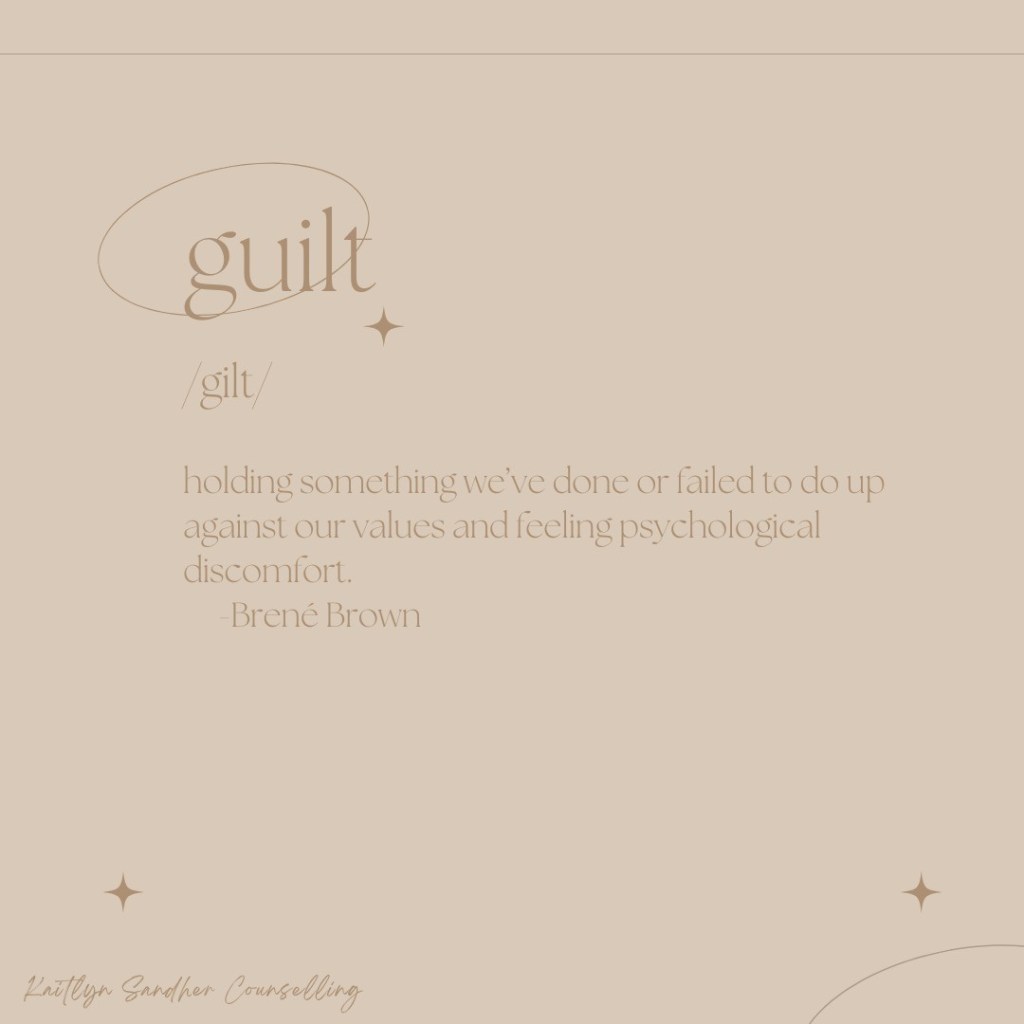
Guilt (in small amounts) is an adaptive and helpful emotion that helps us to make moral and universally acceptable decisions about our behaviour. People who feel guilt are likely to also feel empathy, compassion and understanding towards others. Guilt has a great impact not only on the self but also on our relationships. An example that I use in session to define guilt is “I feel guilty about eating your chocolate bar”. In this sentence, the blame is placed on the behaviour (eating your chocolate bar). We still feel difficult emotions such as disappointment and embarrassment but generally can sit with them and work through them.
on the other hand…
Shame is an intense and excruciating feeling or experience where we believe something is fundamentally wrong about ourselves due to an experience or situation. At the heart of shame, we feel unworthy of love and belonging. An example of shame I use in session is, “I am an awful person for eating your chocolate bar”. In this sentence, we are now taking the blame off the behaviour (eating the chocolate bar) and placing it on ourselves. When this occurs our view of self shifts and can lead to feelings of inadequacy, depression, and poor self-image.
A good way to identify whether you feel shame or guilt about an experience is to ask yourself how much you push away thinking about that experience. Do you keep it hidden? Has the experience changed the way you think about yourself in a negative way? If the answers are yes, it is likely you’re experiencing shame.
 KAITLYN SANDHER COUNSELLING
Leave a comment