“That is not your job🤎”- a sentence I find myself repeating often in my therapy sessions
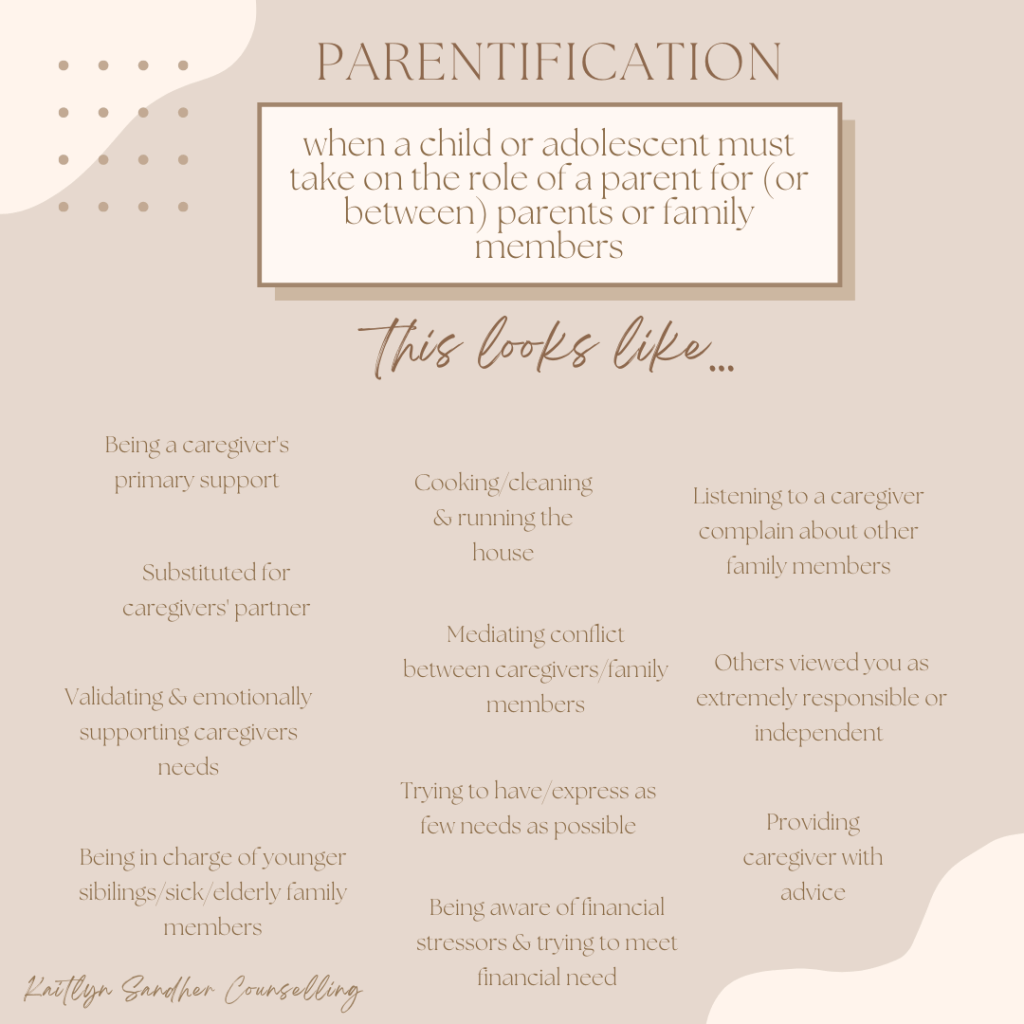
Parentification can show up in any family, at any time, anywhere in the world. Parentification occurs when a caregiver relies on their child to support them indefinitely without sufficient reciprocity.
Generally, there are two types of parentification
1- Emotional Parentification- A child becomes the parent’s therapist, emotional support, or confidant. This can sometimes appear as the child is being treated emotionally like the caregiver’s partner. The caregiver might talk to the child about their frustrations, complain about relationships, cry or even hurt or threaten to hurt themselves in front of the child. Emotional parentification often occurs in families where the caregiver(s) are struggling with mental illness or attachment trauma (see my post on attachment).
2- Instrumental Parentification- A child participates in functional responsibilities like physical labour, support of the home (cooking, taking care of siblings beyond age-appropriate care, grocery shopping, financial assistance and other adult responsibilities
Some of the situations that parentification can arise from include:
-Divorce
-Caregiver’s struggling with mental illness
-Caregiver’s attachment trauma
-Death of a caregiver or sibling
-Caregiver struggling with substance use
-Chronic disease or disability of one or both caregivers, or a sibling
-Physically abusive relationship between caregivers
-Physically or sexually abusive caregiver/child relationship
Parentification can often be masked as a child who is seen by others as extremely mature or independent for their age; however, research states that it can have far-reaching negative psychological effects.
 KAITLYN SANDHER COUNSELLING
Leave a comment